
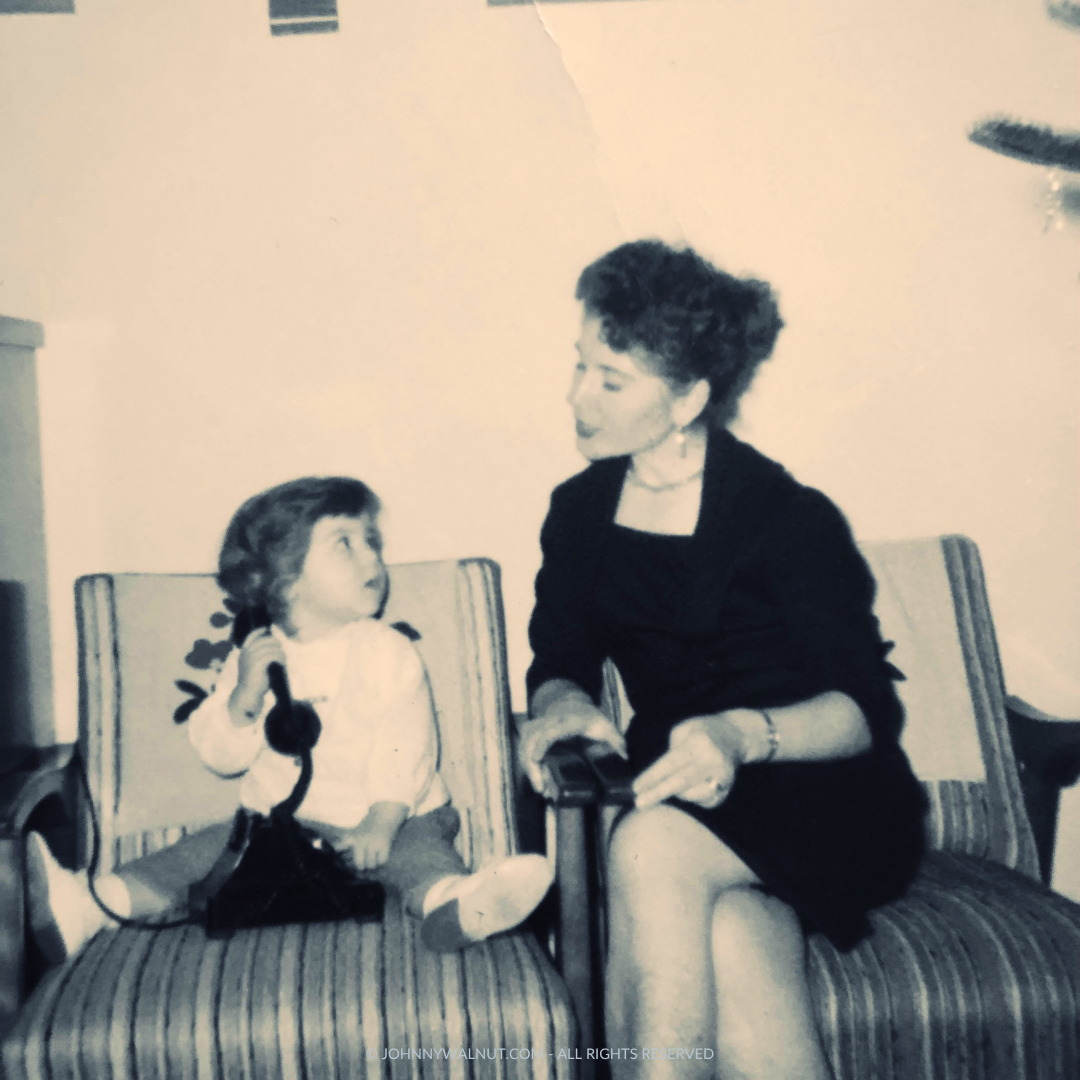
Jeanine has been a regular at this Little Italy café all week, so the baristas know to top her espresso with a little extra crema and serve it with a tiny spoon ribbed for grip.
They watch from behind the coffee machine like nosy neighbours twitching the curtains while she twirls the frothy cream into puffy lollipops, then tacitly low-five when she whirls her espresso into a funnel cloud to knock it back like any self-aware signorina should.
On rainy days like today, she picks a window table for the dependable stream of eight notes tap-tapping against the glass.
Her watch alarm sounds, offbeat. She asks for the tab.
Jeanine is 15. She’d stopped for a quick coffee on her way to collecting her parents from daycare.
Every generation swears hand-over-heart to parenting being more difficult than it was for the cohort before them. The evidence, however, says otherwise, that parenting has always been challenging, prompting mental heath counsellor Dr. Ahou Vaziri Line to quip in Psychology Today “that asserting that parenting is harder than ever is the equivalent of complaining about walking in the snow to school uphill both ways.”1
So why are so many parents burning out at historic rates, triggering advisories like the U.S. Surgeon General’s on their mental health?2 Has raising children become a health hazard?
More importantly, if parents are supposedly so vigilantly invested in their progeny, how are we bringing up the most uncivil and least flourishing generations on record?
Meet Jeanine.
Imagine her precipitated into a reality in which teenagers take over from unfit parents in a bid to restore order.
You’ve met her mom and dad, Kathy and Will.
Kathy and Will had zero faith in their ability to raise children. So they sought expert advice.
TikTok opened their eyes to gentle parenting, brutal parenting, extreme parenting, helicopter parenting, snowplow/lawnmower parenting, drone parenting, hothouse parenting, intensive parenting, all the way to the nouveau darling models of the label-free-averse parent-verse, cycle-breaking & repair and AI-enabled parenting, to name a few.
The more overdone the language employed to frame the prescriptive narratives driving modern parenting choices, the harder they bit.
Sleepovers were sunset and replaced with “lateovers” and “sleepunders,”3 Jeanine was made to “rot”4 in summer like all the cool kids in the UK, they chose “parental action”5 over raising their child (hey, if it’s good enough for the Germans), and swore off timeouts when an influential French pro-positive-parenting paediatrician likened them to “spousal abuse.”6
Permissiveness became the honeytrap of choice. Not for Kathy and Will the well-behaved child. Jeanine was being groomed for well-adjustment.
This liberated Kathy and Will, like many of Jeanine’s friends’ parents, to pursue their ascension toward the Great Unburdening. Pickups were forgotten, students performed school concerts and plays before empty auditoriums (although the events did sell out in a flash; the tickets proved great fodder for showing one’s exemplary parenting receipts on social media), fridges and pantries went bare, bedtime stories were read aloud by tablets, and soccer games went unattended (but there were fewer fights in the stands).
Moms and dads often went missing for days. Rumours of alien abductions abounded until they were eventually sighted at empowerment retreats where obliging gurus encouraged them to lean into their ineptitude as parents.
Jeanine couldn’t remember the last meal they shared as a family, but recalls wishing Kathy and Will were there the weekend she got her period. Praise AI for being around to explain it and direct her to the nearest pharmacy.
The coup was staged in the morning, while parents were under the influence of their Sativa-infused smoothies.
Kitchen floors were triple-stacked with industrial-grade bubblewrap to cushion the landing for parents who might collapse from embarrassment. Remarkably, they leapt for joy, the ratatat of the exploding bubbles giving the takeover the air of Chinese New Year.
Authority was surrendered enthusiastically, and control of households passed on to the children. The parents were relieved.
I offer this speculative parable by way of apology to the children of modern parents of a particular stripe, individuals who choose to have children and awaken one day to the realization they have to raise them;
who can’t make it, so they fake it, become the performative parents for whom children are status markers to be slotted between a white picket fence and adopting a rescue pet, and who conflate that fantasy with genuine solicitude for their kids’ wellbeing;
who chase theatrical rebrands — F Around and Find Out, serve and return, authoritative 2.0 — of traditional rearing principles to contrive the veneer of parenting;
who gather in public parks to shriek their parental ambivalence and whose raw confessionals the metaverse mistakes for parental acumen.
Parenting is in a state of crisis. On the bright side, espresso consumption is up.
Footnotes
- https://www.psychologytoday.com/ca/blog/nobody-knows-what-they-are-doing/202508/is-parenting-really-harder-today ↩︎
- https://www.nytimes.com/2024/09/14/upshot/parents-stress-murthy-warning.html ↩︎
- https://www.parents.com/families-taking-a-break-from-sleepovers-8552218 ↩︎
- https://www.theguardian.com/news/2025/jun/10/summer-kid-rotting-parents-children-camps-activities ↩︎
- https://www.bbc.com/worklife/article/20200225-the-parenting-style-sweeping-europe ↩︎
- https://www.newyorker.com/news/letter-from-europe/french-parents-dont-know-what-theyre-doing-either ↩︎